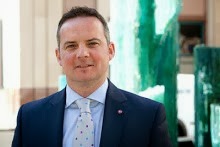
Last year, George Osborne took to the micro-blogging site Twitter to announce his Autumn Statement. Sadly, there was no mention of this year’s speech on the Chancellor’s social media account, but we do know it will be on Wednesday December 3rd and if he follows last year, Mr Osborne will be on his feet around noon.
Before we look at what we can expect in the Autumn Statement, let’s first look at some of the background to it: the picture is rather murkier – and perhaps less optimistic – than it was last year.
First of all there is a General Election just around the corner: the next Election will be held on May 7th 2015. Traditionally, that would mean a Chancellor of the Exchequer gearing up for a raft of tax giveaways in the Autumn Statement and in the March Budget. We doubt that will be the case this time.
The central theme running through George Osborne’s period as Chancellor has been deficit reduction – and it’s unlikely that he’ll give up on that now. Generally speaking, Osborne’s time as Chancellor has been viewed favourably in the financial markets: the recent IMF report which was critical of many countries and spoke of an ‘uneven’ recovery in global markets, was full of praise for the UK. Osborne is unlikely to throw that reputation away.
Besides, his hands are tied. As he said when speaking to the BBC after the IMF published its report, “The UK is not immune to what is happening on the continent”. What is happening is a serious slowdown, with even the German economy recently reporting a fall in output.
UK growth is generally expected to be 3.1% this year. However, a recent report from the Ernst & Young Item Club has forecast a fall to 2.4% next year. The Chancellor has also found himself faced with falling tax revenues: most of the new jobs that are being created are low paid jobs, and more people are becoming self-employed.
Throw in the political uncertainty from the Scottish referendum result and the rise of UKIP and George Osborne’s room for manoeuvre is limited. He appears to have already told his Cabinet colleagues that there is no money for extravagant giveaways, and the rest of us can expect to receive the same message on December 3rd.
So what can we expect? After all, this is the Chancellor who gave us “the most radical reforms to pensions for a hundred years” and totally re-wrote the rules on Individual Savings Accounts. Despite the limits he has to work with, we can still expect George Osborne to pull at least one rabbit out of the hat.
It might well be another re-writing of the ISA rules – or a new type of ISA – designed to encourage peer-to-peer lending. Start-ups and small businesses are still struggling to find capital from conventional sources. Not surprisingly, there are now an increasing number of sites appearing on the web allowing businesses to ‘crowdfund’ – to raise money from the general public. There are suggestions that the Chancellor may officially recognise this trend and the help it is giving to emerging businesses and take steps to encourage this lending by the general public.
For more established businesses, there are strong suggestions – not least from Business Secretary Vince Cable – that there will be steps taken to hand small businesses rate relief. They should expect something “positive in the pipeline in the Autumn Statement” according to Mr. Cable. This may well be linked with moves to encourage investment in UK high streets, which continue to struggle.
After the pensions changes were announced in the March Budget, Pensions Minister, Steve Webb, glibly announced that the Government, “wouldn’t be bothered” if people used their pension pots to buy a Lamborghini. George Osborne seems inclined to trust the good sense of the British people, but don’t be surprised if there is further tinkering with the pensions rules. Now the dust has settled, there are suggestions that the new rules have created some loopholes which the Chancellor may be keen to close.
He’ll also continue with his wider crackdown on tax evasion, although as the Daily Telegraph recently commented, digital companies operating in several countries are increasingly needing “international, not local” taxation systems.
Finally, expect the Chancellor to take further steps to address the skills shortage in British industry. In a recent study by the accountants Grant Thornton, 40% of UK businesses identified skills shortages as their biggest problem, with a significant number saying that a reduction in national insurance contributions would make them more likely to take on apprentices. A move in this direction would come as no surprise.
Finally, expect the Chancellor to take further steps to address the skills shortage in British industry. In a recent study by the accountants Grant Thornton, 40% of UK businesses identified skills shortages as their biggest problem, with a significant number saying that a reduction in national insurance contributions would make them more likely to take on apprentices. A move in this direction would come as no surprise.
Whatever other surprises the Chancellor comes up with on December 3rd will be covered in our Autumn Statement Bulletin. As last year, we’ll be preparing this as the Chancellor is speaking and we’ll be working into the evening – so we’d expect the Bulletin to be available to our clients the following day.